
What Is Sepsis? Symptoms, Causes, Diagnosis, Treatment and Prevention
By Admin · Content Admin
Learn about sepsis symptoms, causes, diagnosis, treatment, risk factors and prevention, including when ICU care and organ support may be needed.
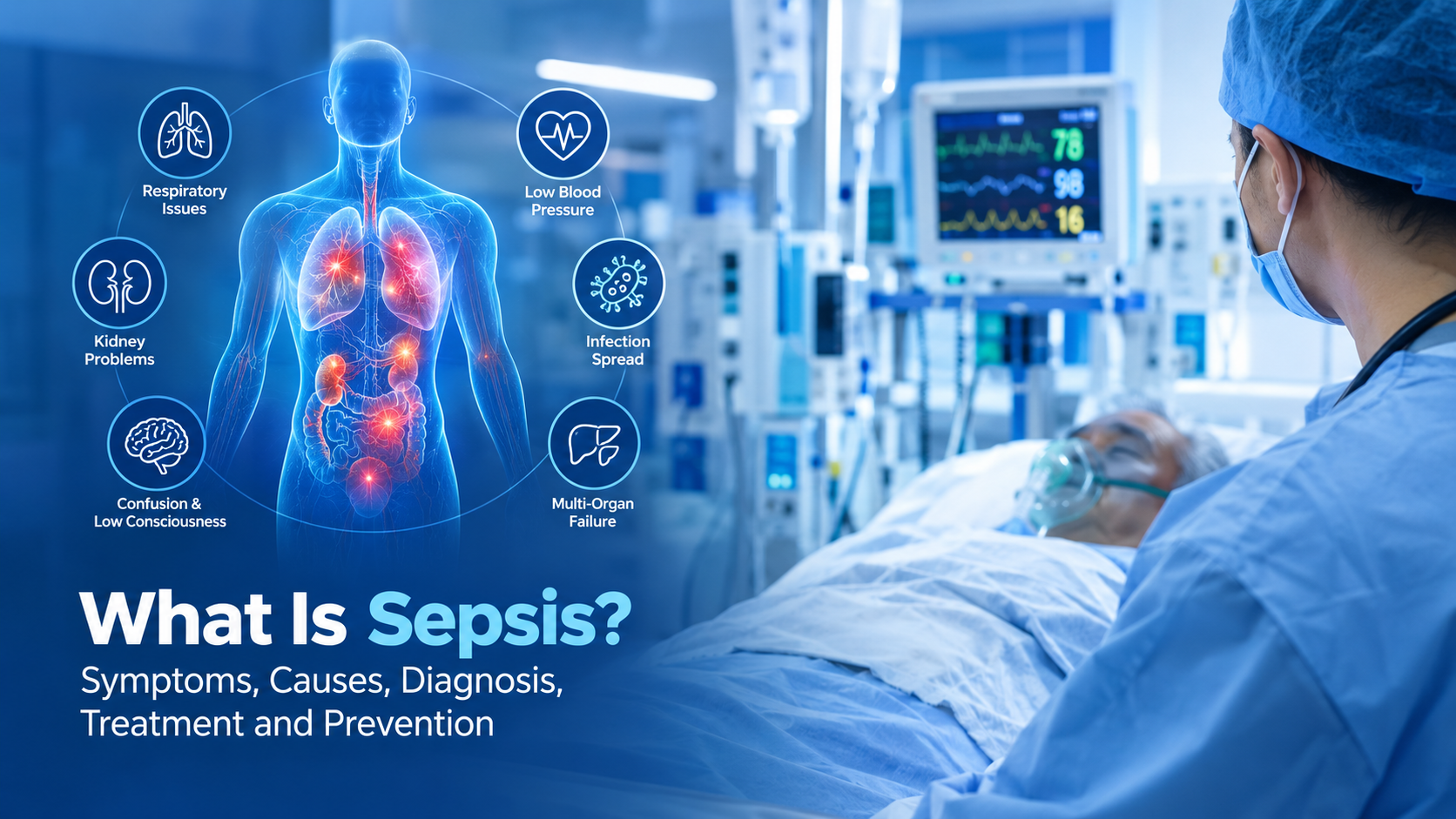
The extreme immune response to the infection in the body is termed 'sepsis'; it is life-threatening, as the immune system makes the organs and tissues injured it may also refere to the multi-organ failure. It is responsible for the infection inside the lungs, urinary tract or skin. One of the most common causes is septicaemia, that is, bacterial infection inside the blood.
It is developed in the older as well as younger persons; it attacks the persons with the weak immunity system.
Not only bacterial but viral infections can also lead to sepsis.
Early diagnosis of this is necessary because that can help in controlling as well as getting the parts of the body treated timely.
There are approximately 1.7 million cases of sepsis each year in the United States, according to the Centers for Disease Control and Prevention (CDC). It’s also responsible for nearly 350,000 deaths.
Different stages of sepsis:
There are different stages of sepsis:
Sepsis, severe sepsis and septic shock. Now they divide the condition into sepsis and septic shock. They use the number of organs damaged by sepsis to indicate its severity.
Symptoms and Causes
Sepsis can affect different areas of the body, so it can be diagnosed inn many possible ways. When sepsis is in the bloodstream, it may develop a sepsis rash.
Other conditions of sepsis include:
Strong urge to pee and peeing less
Weakness and low energy levels
Heart rate faster than normal
High blood pressure
Chills
Shaking of body
Shortness of breath
Extreme pain
Discomfort
Cause
The main cause of sepsis is bacterial infection, but along with it, bacterial and fungal infections are also the cause. It may cause disfunction in the body.
Here are some causes of sepsis:
Infection in lungs such as pneumonia.
When you have a catheter infection, it may be in the lungs and kidneys.
Infection of bladder
Abdominal infection
The gall bladder or liver may cause infection.
Infections involving skin or the skin's connective tissue
What are the risk factors of sepsis?
Sepsis can develop in anyone having weak immunity, but most likely it is in:
age 65 or older
In pregnant women
Have certain medical conditions, like diabetes, obesity, cancer or kidney disease
Have a weakened immune system
Are in the hospital for other medical reasons
Having large burns or wounds or any other severe injuries
Patients having catheters, IVs or breathing tubes
Diagnosis of sepsis
Specialists plan a treatment for the patient with sepsis after the confirmation of sepsis through various treatments. For further confirmation and proper diagnosis, as well as a specific treatment plan, they perform other tests such as:
Culture tests
Blood tests
Imaging tests
Urine tests
The tests may depend upone the recommendation of specialists.
How does a specific effect the body?
Sepsis can affect multiple organs, and it includes:
Lungs
Infection in the lungs can cause respiratory issues, such as shortness of breath, etc.; it may cause respiratory failure.
Kidneys
It can cause acute kidney injury and reduced urine output as well as low blood flow.
Brain
It may cause drowsiness or confusion as well as reduction of consciousness.
Heart and Circulation
Sepsis can cause blood pressure to fall and may require medications to support circulation.
Liver and other multiple organs
It may impair the liver function as well as affect the functioning of more than one or two organs.
What is the treatment of sepsis?
The treatment of sepsis should be started immediately after the diagnosis.
The treatment may include:
Antibiotics are the most important when bacterial infection is diagnosed. When the laboratory tests confirm the organism, it may be adjusted accordingly.
IV fluids:
These IV fluids are required to maintain blood flow of the patients' organs. The fluids will also help prevent blood pressure from dropping too low.
Oxygen and respiratory support:
Patients having difficulty in breathing can also get respiratory support
Supplemental oxygen
High-flow oxygen
Non-invasive ventilation
Mechanical ventilation
If the organs are damaged and there are chances that they can affect the other parts of the body, then those are removed through surgery.
Nutritional and Supportive Care:
Critically ill patients may also require:
Nutritional support
Electrolyte correction
Blood glucose management
Pain management
Prevention of hospital-related complications
Infection-control measures
Rehabilitation
Does Sepsis Require ICU Care?
Every patient going through sepsis doesn't require an ICU; they are treated with the proper 24/7 monitoring of vitals.
ICU care is necessary when sepsis causes:
Respiratory failure or breathing issues
Disfunctioning of kidneys
Unconsciousness
Ventilation support
Septic shock
The purpose of ICU care is to provide continuous observation and support for organs that are failing or at serious risk.
How can sepsis be prevented?
Here are some measures that can prevent the risk of sepsis:
Good hygiene
Safe food
Appropriate wound care
Vaccination
Management of blood pressure
Taking care properly of meals if diabetic
Seeking proper medical care
Treatment of sepsis in Reliance Hospital, Islamabad
If the sepsis starts affecting the vital organs and continuously affecting the health, then critical care is required as well as continuous 24/7 monitoring to treat or overcome it.
ICU of Reliance Hospital Islamabad provides organ support and sepsis treatment for the patients who are in critical condition. Here the continuous monitoring of blood pressure, respiratory function, etc., is done.
The ICU of Reliance Hospital also provides 24/7 critical-care monitoring, bedside monitoring, mechanical ventilator support, trained ICU specialists and nurses, emergency response, oxygen systems, infusion and syringe pumps, isolation beds, infection-control protocols and diagnostic support.
For a patient whose sepsis affects breathing, circulation or kidney function, the ICU team can coordinate different forms of organ support while doctors continue treating the underlying infection. Here the consultants coordinate with the specialists of medicine, surgery, infectious disease and other specialised teams according to the patient's needs.
Frequently Asked Questions
What are the top 3 causes of sepsis?
The top three sites of infection are the lungs (pneumonia), the urinary tract (UTIs), and the abdomen or gastrointestinal tract.
What are the first symptoms of sepsis?
Warning signs of sepsis include changes in body temperature, whether hot or chill; rapid breathing; shortness of breath; confusion; fast heart rate; severe weakness; clammy skin; and reduced urine production.
Does every sepsis patient need a ventilator?
No. A ventilator is used when a patient develops respiratory failure or cannot breathe adequately or protect their airway.
Can sepsis be prevented?
The risk can be reduced through infection prevention, vaccination, good hygiene, wound care, management of chronic diseases and early treatment of infections. The specialists of Relaaince Hospital Islamabad are dedicated to serving the patients in every possible way.
Conclusion
Sepsis is a serious medical emergency that can develop when the body's response to an infection begins damaging its own tissues and organs. It can originate from infections affecting the lungs, urinary tract, abdomen, skin and other parts of the body. Symptoms such as difficulty breathing, confusion, rapid breathing, low blood pressure, reduced urine output, clammy skin and severe weakness as well as dizziness should never be ignored when an infection is present.
Diagnosis involves 24/7 monitoring of vital signs, tests of cultures and blood, urine, etc., and imaging such as X-rays when required. Treatment focuses on controlling the infection while supporting circulation, breathing and other affected organs. Severe cases may require ICU care, ventilator support, blood-pressure medicines, kidney support or other forms of organ support.
For patients in Islamabad and Rawalpindi, Reliance Hospital provides dedicated ICU services for severe infections and sepsis, including continuous monitoring, sepsis and organ support, respiratory support, proper monitoring and multidisciplinary critical care. Early recognition and complete guidance and medical assessment remain essential because sepsis can progress rapidly, and timely treatment can significantly influence the patient's health.