
Does Your Maternity Hospital Need NICU, PICU and ICU Support? A Guide for Expectant Parents
By Admin · Content Admin
Learn why NICU, PICU and ICU support matters when choosing a maternity hospital in Islamabad, including care for newborns and mothers.
When choosing a maternity hospital, expectant parents often compare gynaecologists, delivery packages, room categories and routine pregnancy services. Another important question is what happens if the mother or baby needs specialised care during or after delivery.
Some pregnancies require additional monitoring because of maternal health conditions, placental problems, premature labour or concerns about the baby's growth. In other cases, an unexpected complication develops during labour or after birth, even when pregnancy has appeared to progress normally.
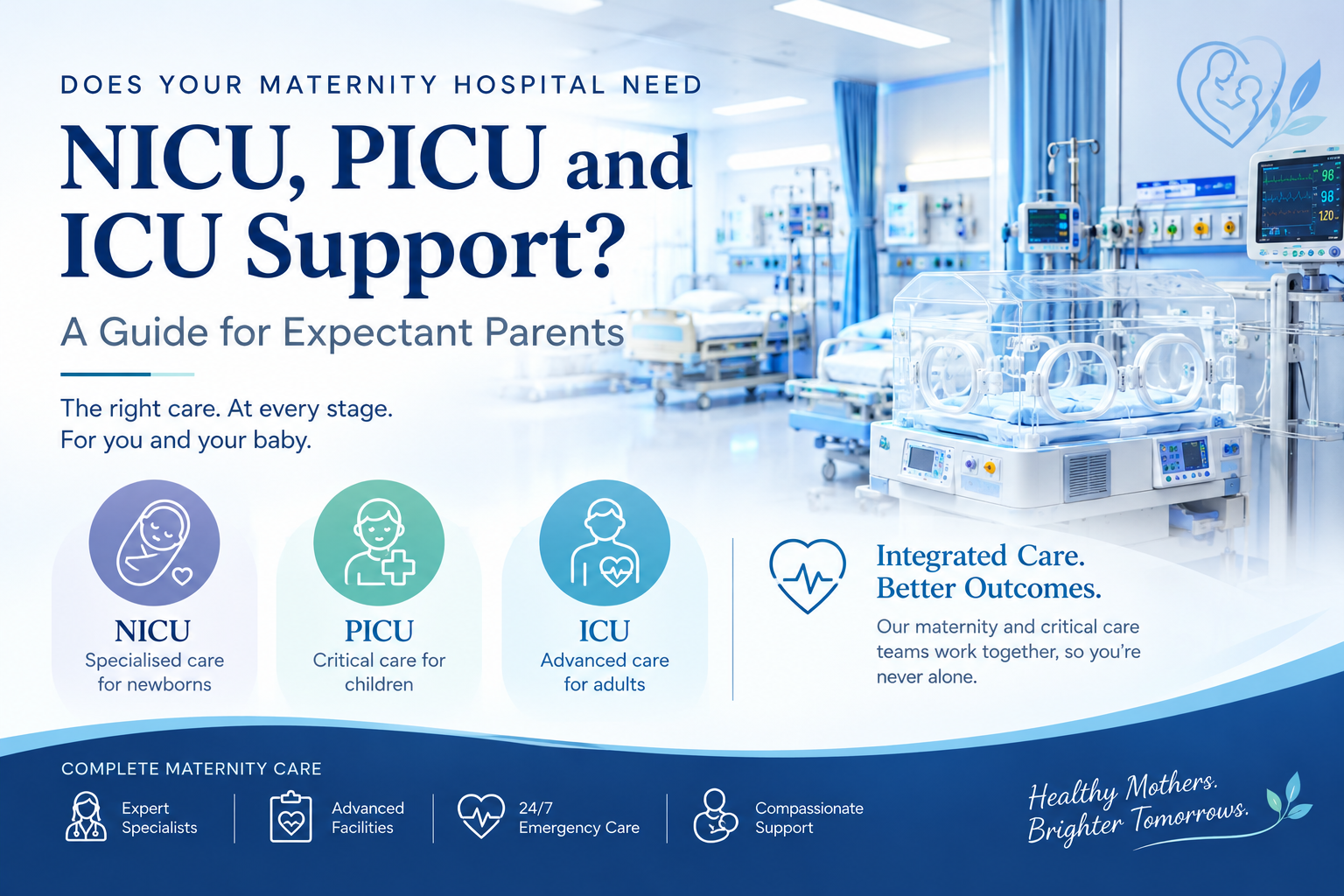
Understanding the difference between the Neonatal Intensive Care Unit (NICU), Paediatric Intensive Care Unit (PICU) and adult Intensive Care Unit (ICU) can help families ask better questions before choosing a hospital.
Reliance Hospital in Bahria Town, Rawalpindi, lists gynaecology and obstetrics, newborn care and intensive care services. Families can discuss the available facilities, admission criteria and arrangements for specialist care with the hospital before delivery.
Why Is Critical-Care Support Important When Choosing a Maternity Hospital?
Most pregnancies do not require intensive care. However, if a mother or baby develops a serious complication, the medical team may need to arrange urgent assessment, stabilisation, monitoring or transfer to a specialised unit.
When comparing maternity hospitals, ask whether the hospital has the relevant facilities on-site, what services are available around the clock and how the maternity team coordinates with critical-care specialists.
This is especially important for women with high-risk pregnancies, a history of serious delivery complications or medical conditions that may affect pregnancy.
The purpose of planning is not to assume that complications will occur. It is to understand what arrangements are available if additional care becomes necessary.
What Is the Difference Between NICU, PICU and ICU?
These units provide different levels and types of care. They are not interchangeable.
What Is a NICU?
A Neonatal Intensive Care Unit cares for newborn babies who need specialised monitoring or treatment.
A baby may need NICU care because of:
Premature birth.
Breathing difficulties after delivery.
Low birth weight with associated medical concerns.
Serious infections.
Problems maintaining body temperature or blood glucose.
Certain congenital conditions.
Complications requiring close monitoring or specialised treatment.
Depending on the baby's condition, treatment may include respiratory support, temperature regulation, feeding assistance, medication and continuous monitoring.
Not every premature or low-birth-weight baby requires the same level of treatment. The neonatal team determines the appropriate care according to the baby's clinical condition.
Learn more about the NICU and PICU differences explained by Reliance Hospital.
What Is a PICU?
A Paediatric Intensive Care Unit provides intensive treatment and monitoring for critically ill children who need specialised support.
Depending on the hospital's admission criteria, children may need PICU care for severe breathing problems, serious infections, major injuries, complications following surgery or other conditions requiring intensive monitoring.
A PICU is different from a NICU, which focuses on newborns. The appropriate unit depends on the child's age, diagnosis and clinical needs.
Parents should confirm the hospital's current paediatric critical-care services, age criteria and admission arrangements when planning care.
What Is an Adult ICU?
An Intensive Care Unit treats adults with serious medical conditions or complications that require close monitoring and advanced support.
A mother may require ICU care after delivery if she develops a severe complication, such as significant bleeding, a serious infection, respiratory failure or another condition that affects vital organ function.
Admission to the ICU is based on clinical assessment. It does not mean that every woman with a high-risk pregnancy or Caesarean delivery will need intensive care.
Read about the Intensive Care Unit at Reliance Hospital to learn more about the hospital's published critical-care services.
Which Pregnancy Complications May Require Additional Monitoring?
A pregnancy may need closer monitoring if the mother has certain medical conditions or develops complications during pregnancy.
Examples include:
High blood pressure or pre-eclampsia.
Diabetes during pregnancy or pre-existing diabetes.
Significant heart, kidney or respiratory disease.
Placental complications.
Concerns about fetal growth.
Threatened or actual premature delivery.
A history of serious complications in a previous pregnancy.
Having one of these conditions does not automatically mean the mother or baby will require intensive care. The obstetrician assesses the level of risk and determines whether additional consultations, tests, monitoring or a change in the delivery plan are needed.
For some pregnancies, the appropriate plan may involve specialist consultations and a scheduled delivery. Others may require closer observation or urgent intervention if the clinical situation changes.
When Might a Newborn Need NICU Care After Delivery?
Some newborns need additional support immediately after birth, while others develop problems that become apparent during the first hours or days of life.
Possible reasons for admission include:
Premature birth: Babies born early may need help maintaining temperature, feeding, breathing or other vital functions.
Breathing difficulties: A newborn who cannot maintain adequate breathing or oxygen levels may require respiratory support and close observation.
Suspected infection: Serious infection in a newborn can progress quickly and may require urgent investigation and treatment.
Low blood glucose: Some babies need repeated monitoring and treatment when their blood glucose levels are too low.
Other medical conditions: Congenital conditions or complications around birth may require specialised neonatal assessment.
The neonatal team decides whether a baby needs NICU admission, another level of observation or routine newborn care. The decision depends on the baby's condition, not solely on the mother's pregnancy risk category.
What Should You Ask About Emergency Care Before Delivery?
When comparing a maternity hospital in Islamabad or Rawalpindi, ask direct questions about what happens if a complication develops.
Questions about maternal care
Is emergency obstetric assessment available at all hours?
What arrangements are available if an emergency C-section is required?
Is adult ICU care available on-site?
How are anaesthesia and critical-care teams involved when needed?
Who explains changes in the mother's condition and treatment plan to the family?
Questions about newborn care
Is a NICU available on-site?
What types of neonatal respiratory support are available?
Who assesses the baby immediately after delivery?
What happens if the newborn needs a higher level of care?
Are NICU charges included in the maternity package, or billed separately?
Questions about paediatric critical care
Is a PICU available on-site?
Which age groups can be admitted?
What are the admission criteria?
What referral or transfer arrangements apply if a particular service is unavailable?
These questions help families distinguish between a hospital that provides routine maternity care and one that can also manage particular complications on-site.
How Does Reliance Hospital Support Pregnancy and Delivery Care?
Reliance Hospital provides pregnancy and delivery services through its Gynaecology and Obstetrics Department in Bahria Town, Rawalpindi.
Women can discuss antenatal appointments, pregnancy monitoring, delivery options and their medical history with the gynaecology team. The hospital also publishes information about its Pregnancy and Delivery services and ICU facilities.
For families concerned about newborn care, the hospital's NICU and PICU guide provides further information about the purpose of these specialised units.
Before confirming a maternity package, ask the hospital to verify which critical-care services are currently available on-site, which specialists are involved, whether admission is subject to clinical assessment and how charges are calculated.
This is particularly important if you have a high-risk pregnancy or expect to travel from overseas for delivery.
Choosing a Gynaecologist for a High-Risk Pregnancy
If your pregnancy involves a previous C-section, high blood pressure, diabetes, placental concerns or another medical condition, arrange a consultation with a qualified obstetrician.
Reliance Hospital's gynaecology doctors guide lists consultants including Dr. Hira Tanveer, Dr. Rozina Khattak and Dr. Iffat Seema.
During your appointment, discuss your medical history, current medications, previous delivery records and any concerns raised during your ultrasound scans or laboratory investigations.
Ask whether your pregnancy requires additional specialist input and what delivery arrangements would be appropriate for your circumstances.
Frequently Asked Questions
Does every high-risk pregnancy require NICU admission?
No. A high-risk pregnancy may require additional monitoring, but the need for NICU care depends on the newborn's condition after birth.
Will every C-section require ICU care?
No. Most women do not require adult ICU admission following a routine C-section. ICU care may be needed if serious complications develop.
What is the difference between NICU and PICU?
NICU care focuses on newborns who need specialised treatment. PICU care is intended for critically ill children who require intensive monitoring or support. Admission criteria vary by hospital.
Is NICU care always included in a delivery package?
No. Package inclusions differ. Ask whether newborn assessments, NICU admission, medicines, investigations and respiratory support are included or billed separately.
What if a hospital cannot provide the care my baby needs?
Ask about its referral and transfer arrangements before delivery. If a baby needs a level of care that is unavailable locally, the treating team may need to arrange transfer to an appropriate facility, depending on the baby's condition and available resources.
Discuss Your Maternity Care Plan with Reliance Hospital
Choosing a delivery hospital involves more than selecting a room or comparing the price of a normal delivery and C-section.
Understanding the maternity services, emergency arrangements and availability of specialised care can help you make a more informed decision.
Contact Reliance Hospital's Pregnancy and Delivery Department to discuss antenatal care, delivery planning and the critical-care facilities relevant to your pregnancy.
Confirm the current availability of NICU, PICU and ICU services, admission arrangements and maternity package inclusions directly with the hospital before making your decision.