
Is Dental Treatment Safe During Pregnancy? Gum Problems, Toothache and Care Before Delivery
By Admin · Content Admin
Learn about gum bleeding, toothache, dental treatment safety and oral care during pregnancy. Find out when to see a dentist in Islamabad.
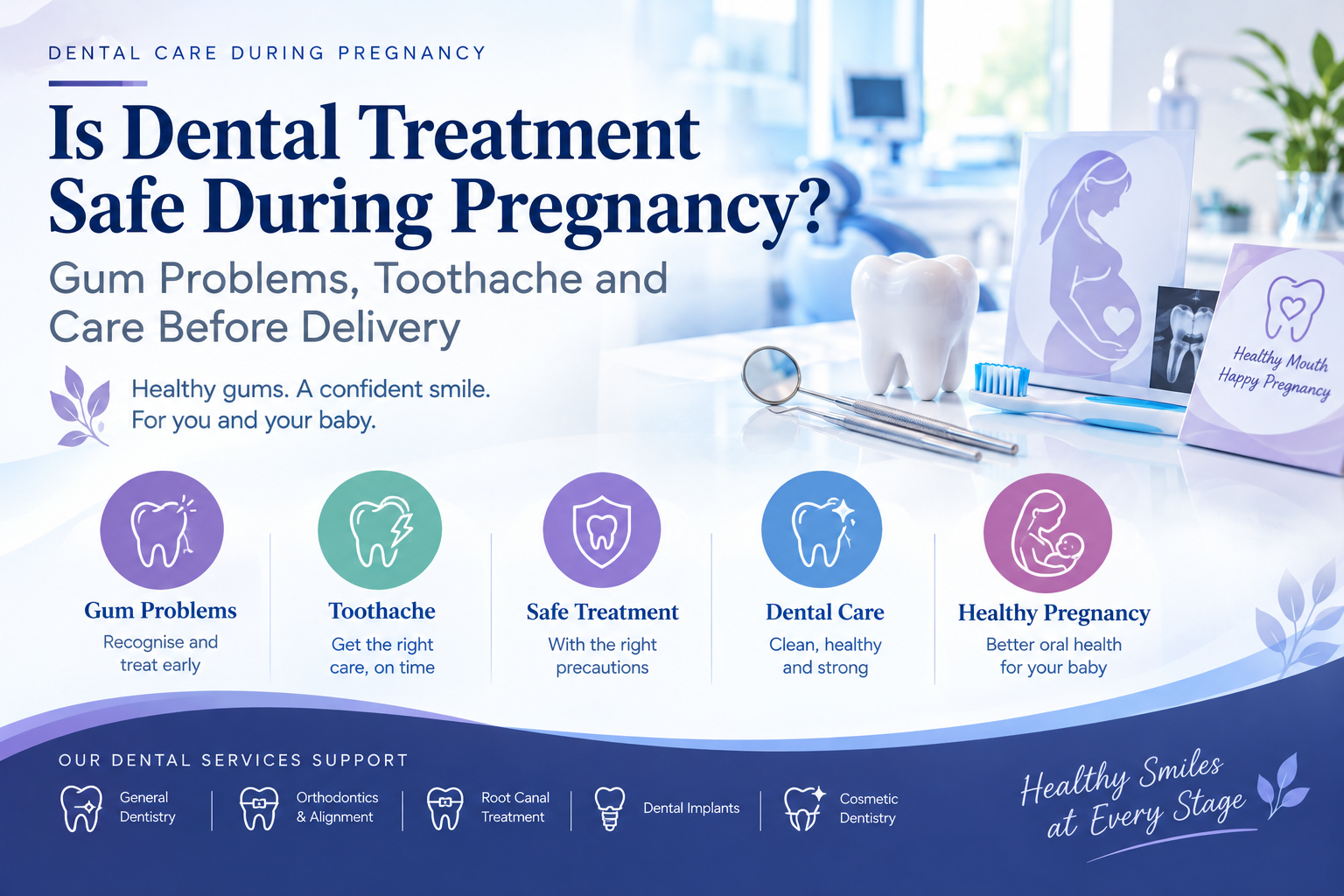
Pregnancy brings hormonal changes that can affect a woman's gums, teeth and overall oral health. Some women notice bleeding while brushing, swollen gums, increased sensitivity or toothache. Others may have an existing cavity or dental problem that becomes more difficult to ignore during pregnancy.
These symptoms raise common questions: Is dental treatment safe while pregnant? Should a toothache wait until after delivery? Can you have a dental cleaning or root canal during pregnancy?
In most cases, preventive, diagnostic and necessary dental care can be provided during pregnancy with appropriate precautions. Delaying treatment for an infection or significant dental problem may allow it to worsen.
Women receiving pregnancy care in Islamabad or Rawalpindi can discuss oral health with their obstetrician and arrange an assessment with a qualified dentist when needed.
Why Can Pregnancy Affect Dental Health?
Hormonal changes during pregnancy can make the gums more sensitive to plaque, increasing the likelihood of inflammation. Nausea, vomiting, changes in eating patterns and difficulty maintaining a regular brushing routine can also affect oral health.
Common dental concerns during pregnancy include:
Bleeding gums while brushing or flossing.
Red, swollen or tender gums.
Increased plaque buildup.
Tooth sensitivity.
Tooth decay or cavities.
Toothache caused by an existing dental problem.
Acid exposure following repeated vomiting.
Discomfort around an existing gum or tooth infection.
Pregnancy does not mean that dental problems are inevitable. Regular brushing, cleaning between the teeth, appropriate dental checkups and early assessment of symptoms can help reduce the risk of complications.
Is Dental Treatment Safe During Pregnancy?
According to the American Dental Association and the American College of Obstetricians and Gynecologists, preventive, diagnostic and restorative dental care can generally be provided during pregnancy when appropriate precautions are taken.
Necessary treatments, including fillings, root canal treatment and extractions when indicated, should not automatically be postponed until after delivery.
The appropriate treatment depends on the dental problem, the stage of pregnancy, the woman's medical history and the dentist's assessment. The dentist may coordinate with the obstetrician when a pregnancy complication or other medical concern affects treatment planning.
For additional clinical guidance, read the American Dental Association's guidance on pregnancy and oral health.
What Should You Do About Bleeding Gums During Pregnancy?
Bleeding gums can be a sign of pregnancy-related gingivitis, which involves inflammation of the gum tissue.
You may notice bleeding when brushing or flossing, redness along the gumline, swelling or tenderness.
To help protect your gums:
Brush twice daily with fluoride toothpaste.
Clean between your teeth daily using floss or another suitable interdental cleaner.
Limit frequent sugary snacks and drinks.
Keep up with recommended dental checkups.
Arrange a dental assessment if bleeding persists or your gums become painful or swollen.
Do not stop cleaning your teeth simply because your gums bleed. Gentle, consistent oral hygiene is important.
A dentist can assess whether plaque buildup, gingivitis, periodontal disease or another problem is contributing to your symptoms. Professional cleaning may be recommended when appropriate.
If you experience facial swelling, fever, severe pain or difficulty swallowing or breathing, seek urgent medical or dental care rather than waiting for a routine appointment.
Can You Have a Dental Cleaning During Pregnancy?
Routine dental cleaning and preventive care can generally be performed during pregnancy.
Professional cleaning helps remove plaque and hardened deposits that cannot be removed effectively through brushing alone. It may be particularly useful when pregnancy-related gum inflammation makes the gums bleed more easily.
Your dentist will assess your gum health and recommend an appropriate cleaning plan.
If you have severe gum inflammation, periodontal disease or another condition requiring treatment, the dentist may recommend additional procedures according to your clinical needs.
For patients seeking dental care in Bahria Town, Rawalpindi, the Reliance Hospital Dental Department provides information about its dental services and clinicians.
What If You Have a Toothache During Pregnancy?
Toothache should not automatically be dismissed as a normal part of pregnancy. It may be caused by tooth decay, a cracked tooth, gum disease, inflammation or infection.
The correct treatment depends on the underlying cause.
Dental fillings
If a cavity is causing pain or has a risk of progressing, a dentist may recommend a filling. Untreated decay can become more extensive and may eventually require more complex treatment.
Root canal treatment
If decay or injury has affected the inner tissues of a tooth, root canal treatment may be recommended to manage the problem and preserve the tooth.
Necessary root canal treatment can generally be performed during pregnancy with suitable precautions.
Tooth extraction
An extraction may be recommended when a tooth cannot be saved or when another serious dental problem requires removal. The dentist will assess the urgency, the available alternatives and any pregnancy-related considerations.
Dental X-rays and local anaesthesia
Dental X-rays and local anaesthesia can generally be used during pregnancy when clinically indicated, with appropriate precautions. Tell your dentist that you are pregnant, how many weeks pregnant you are and whether your obstetrician has identified any complications.
Do not start antibiotics, painkillers or other medication without checking that they are appropriate for your pregnancy.
Which Dental Treatments May Be Better Planned for Later?
There is an important difference between necessary dental treatment and elective cosmetic procedures.
If a tooth is infected or causing significant pain, treatment may be required during pregnancy. By contrast, procedures that are primarily cosmetic and can safely wait may be scheduled after delivery.
Examples of elective procedures that may be deferred include certain teeth-whitening treatments and non-urgent cosmetic smile makeovers.
Your dentist can help distinguish between treatment that is needed to protect oral health and treatment that can be postponed without creating a clinical risk.
Do not assume that every dental procedure must wait until after childbirth. Equally, do not undergo an elective procedure without discussing its suitability during pregnancy.
How Should You Protect Your Teeth During Pregnancy?
Maintaining a simple oral care routine can help reduce the risk of dental problems.
Brush and floss consistently
Brush twice daily with fluoride toothpaste and clean between your teeth once a day. If your gums are sensitive, use a soft-bristled toothbrush and gentle technique.
Manage morning sickness carefully
Vomiting exposes the teeth to stomach acid, which can contribute to enamel erosion. After vomiting, rinse your mouth with water and avoid brushing immediately. Ask your dentist for advice if vomiting is frequent.
Watch your eating and drinking habits
Frequent sugary snacks and drinks increase the risk of tooth decay. Choose balanced meals and drink water regularly.
Keep your dental appointments
If you have not had a dental checkup recently, consider arranging one during pregnancy. Tell your dentist about your pregnancy and any medications or medical conditions.
Discuss persistent symptoms
Ongoing bleeding, tooth sensitivity, pain or swelling deserves assessment. Early care can help prevent a manageable problem from becoming more serious.
Can Dental Problems Affect Pregnancy?
Good oral health is important for a woman's overall health during pregnancy.
Research has examined possible associations between periodontal disease and outcomes such as preterm birth. However, an association does not establish that gum disease directly causes these outcomes, and evidence about whether periodontal treatment improves pregnancy outcomes remains mixed.
The clearest reason to maintain oral health is to prevent and treat dental disease, relieve pain and protect the teeth and gums.
Do not rely on dental treatment as a guaranteed way to prevent pregnancy complications. Continue routine antenatal care and discuss any concerns with your obstetrician.
When Should You See a Dentist Urgently?
Arrange a prompt dental assessment if you have:
Persistent or worsening toothache.
Swollen or painful gums.
Pus or a suspected dental abscess.
A broken tooth causing pain.
Facial swelling.
Fever associated with a dental problem.
Facial or neck swelling with difficulty breathing or swallowing requires emergency assessment.
If you are pregnant and develop a dental problem, tell the dental team about your pregnancy so that treatment, investigations and medications can be selected appropriately.
Dental Care During Pregnancy at Reliance Hospital
Reliance Hospital in Bahria Town, Rawalpindi, provides dental services through its Dental and Orthodontics Department.
Patients can explore the hospital's dental clinic and treatment guide to learn about available services and clinicians.
The dental team includes:
Dr. Ayesha Aurangzeb: Listed in cosmetic dentistry and orthodontics, with services related to tooth alignment and other dental concerns.
Dr. Ayesha Javed: Listed as an Oral and Dental Surgeon.
Lt. Col. (R) Dr. Rizwan Qureshi: Listed in endodontics, including root canal and restorative dental care.
You can review the Reliance Hospital dental doctors and their areas of practice before arranging a consultation.
When booking, mention that you are pregnant, your stage of pregnancy, your symptoms and any relevant medical conditions. The dentist can assess your problem and determine whether treatment is needed now or can safely wait.
If you are also receiving antenatal care at Reliance Hospital, inform your obstetrician about any significant dental symptoms or planned treatment so the teams can coordinate where necessary.
Frequently Asked Questions
Can I visit a dentist in my first trimester?
You can seek dental assessment during the first trimester. Necessary treatment should not automatically be delayed because of pregnancy. Your dentist will determine the appropriate approach based on the urgency of the problem and your medical circumstances.
Can I get a root canal while pregnant?
Root canal treatment can generally be performed during pregnancy when clinically necessary. Your dentist will assess the tooth, explain the treatment and take appropriate precautions.
Is dental cleaning safe during pregnancy?
Routine professional dental cleaning is generally considered safe during pregnancy and may help manage plaque and gum inflammation.
Should I wait until delivery if my tooth hurts?
No. A painful tooth may have decay, inflammation or infection that needs assessment. Contact a dentist promptly rather than assuming the problem can wait.
Can I take painkillers for toothache during pregnancy?
Medication safety depends on the drug, dose, stage of pregnancy and your medical history. Ask your obstetrician, dentist or pharmacist before taking painkillers or other medicines.
Can pregnancy cause permanent damage to my teeth?
Pregnancy itself does not inevitably damage teeth. However, changes in gum sensitivity, vomiting, dietary habits and oral hygiene can increase certain risks. Preventive care and timely dental assessment help protect oral health.
Book a Dental Consultation at Reliance Hospital
Pregnancy is a good time to pay attention to your oral health, not a reason to ignore dental symptoms.
If you have bleeding gums, toothache, swelling or a dental problem that needs assessment, contact Reliance Hospital's Dental Department to discuss an appointment.
Tell the dental team that you are pregnant and share any relevant medical advice from your obstetrician. With appropriate assessment and precautions, many dental problems can be treated safely during pregnancy.
Medical note: This article provides general information and does not replace individual advice from your dentist or obstetrician. Treatment decisions should be based on your specific clinical circumstances.