
Why Does My Face Look Different in Unmirrored Photos? Normal Asymmetry or Jaw Misalignment
By Admin · Content Admin
Your face looks off in the camera? Learn why unmirrored photos feel wrong, what normal facial asymmetry is, and the signs of a misaligned bite or jaw.
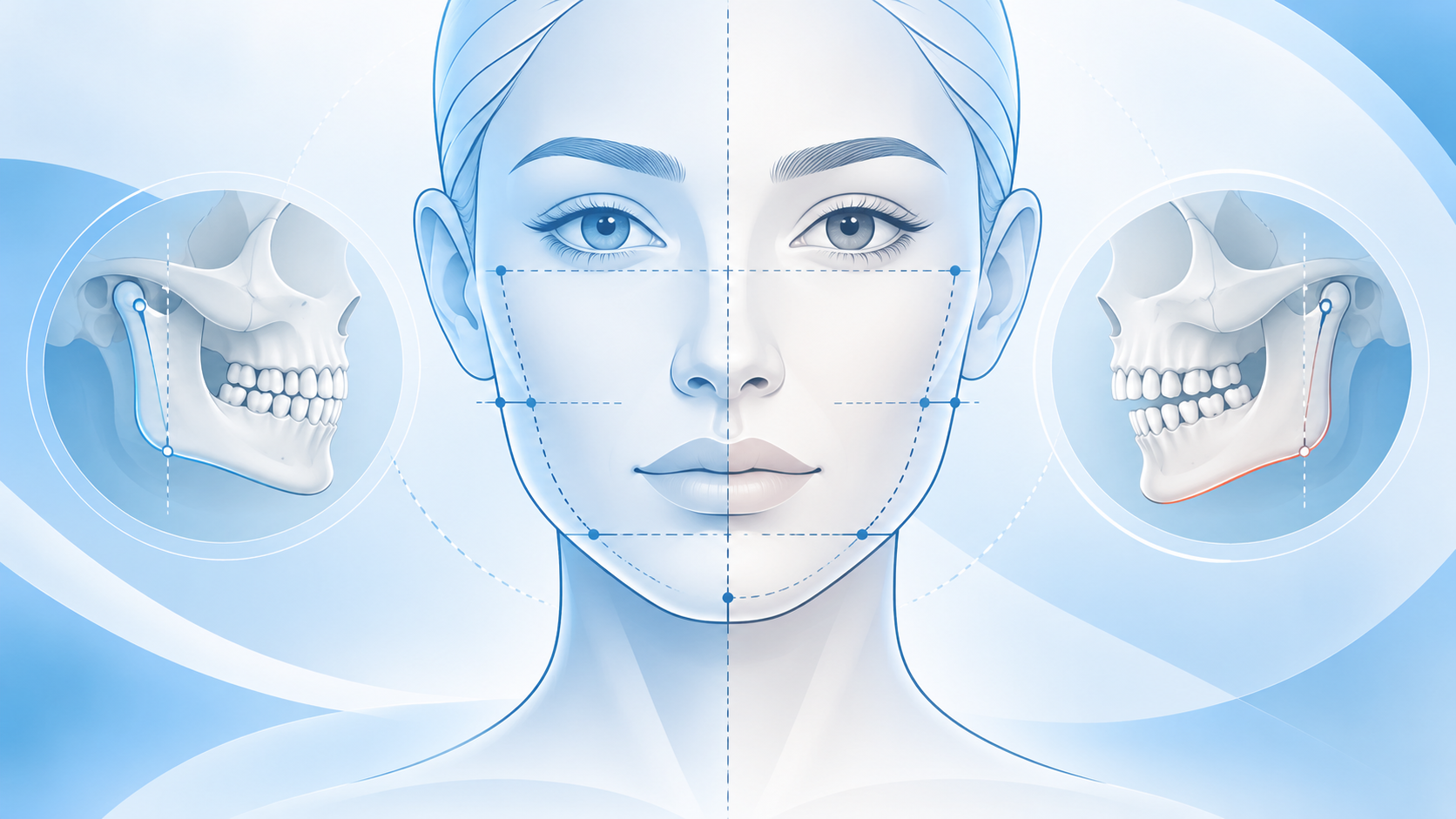
If your face looks "wrong" in an unmirrored camera image but fine in the mirror, it's almost always normal facial asymmetry seen from an unfamiliar side. Your teeth or jaw are more likely misaligned only if the difference shows up in your bite too: teeth that don't meet evenly, a chin that sits off-centre, jaw clicking or pain, or uneven tooth wear.
You've looked at a flipped version of your face in the mirror thousands of times. A photo shows it the right way round, as everyone else sees you. Because nearly every face is slightly uneven, that switch moves your familiar features to the "wrong" side, and your brain notices instantly.
Still, a crooked-looking smile or lower face can sometimes point to a real bite problem. This guide from the dental team at Reliance Hospital Dental Clinic in Bahria Town explains how to tell the difference, what you can check at home, and when an orthodontic assessment is worth booking.
Is facial asymmetry normal?
Yes. No human face is perfectly symmetrical. One eye may sit a little higher, one eyebrow may arch differently, and one side of the jaw may look more defined (Spiegel & More). Perfect symmetry doesn't occur in nature, and faces edited to be perfectly even tend to look strange rather than attractive (Facial Sculpting).
Common, harmless causes of an uneven face include:
- Genetics. Many people simply inherit a slightly fuller cheek or a lower eyebrow on one side.
- Chewing on one side. Favouring one side for years can build up the chewing muscle there.
- Sleeping position. Always sleeping on the same side may contribute to small soft-tissue differences.
- Ageing and sun exposure. Skin and fat change at slightly different rates on each side.
- Dental changes. Missing back teeth, worn teeth or old dental work can shift how your bite closes and how the lower face looks.
So is there a point where asymmetry stops being "normal"? A useful rule: if friends and family never notice it in real life, it's very likely ordinary variation. If it's getting worse over months, or comes with bite or jaw symptoms, it deserves a professional look.
Why does my face look different in the camera than in the mirror?
A mirror shows you a reversed image; an unmirrored photo shows your face the way other people see it. Since almost every face has small asymmetries, flipping the image changes where those features sit, and it can look subtly wrong to you while looking completely normal to everyone else (Popular Science).
Psychologists call the preference for the familiar version the mere-exposure effect: we tend to like what we've seen most often. For your own face, that's the mirror image.
Your phone adds a few more distortions on top:
- Mirrored preview, unmirrored save. Many front cameras show a mirrored preview, then save an unmirrored file, so the photo doesn't match the face you just posed with (Cosmetic Injectables).
- Close-up lens distortion. At arm's length, a wide-angle front lens enlarges whatever is nearest, usually the nose and the centre of the face.
- A slight head turn. A few degrees of rotation makes the nearer side look bigger and shifts the apparent jawline (Face Symmetry Test).
- Side lighting. Shadow on one side can make an eye look smaller or a cheek look hollow.
- A frozen expression. Real faces move. A single frame can catch a half-smile your resting face never holds.
Want a fairer comparison? Take a few photos from about 1.5 to 2 metres away with the rear camera, in even front lighting, with a neutral expression. If the difference mostly disappears, the camera, not your jaw, was the main cause.
Can misaligned teeth or a misaligned jaw cause facial asymmetry?
Yes, sometimes. Malocclusion means your upper and lower teeth don't fit together properly when you close your mouth (Cleveland Clinic). Some types, especially a crossbite on one side, can make the lower face look uneven.
In a crossbite, some upper teeth close inside the lower teeth instead of slightly outside them. Posterior (back-teeth) crossbite is found in roughly 4% to 23% of orthodontic patients, and more than half of those cases affect only one side (condylar asymmetry study, via PMC). In growing children, a one-sided crossbite can affect how the facial bones develop, which is why early checks matter.
When the jaw itself is involved, orthodontists often see a group of signs together: a shifted dental midline, a tilted bite plane, a crossbite on one side, and a chin that deviates to one side (IJERPH, via PMC).
Signs that point to your bite or jaw, not just the camera:
- Your top and bottom front teeth don't line up in the centre.
- Your chin sits noticeably to one side, in person as well as in photos.
- Some upper teeth close inside the lower teeth on one side.
- Your jaw clicks, pops, locks, or aches when you chew or yawn.
- You get frequent headaches or facial muscle pain, especially in the morning.
- Teeth on one side are wearing down, chipping, or becoming sensitive faster.
- You chew mostly on one side because the other side feels "off".
- The unevenness is slowly getting worse, or appeared after an injury.
One or two of these isn't a diagnosis. But if several sound familiar, an orthodontic assessment can confirm whether your bite is contributing.
How do I know if my jaw is misaligned? 4 quick checks at home
These checks can't diagnose anything, but they help you decide whether your concern is about photos or about your bite. Use a mirror and good front lighting.
- The midline check. Smile with your back teeth closed. Is the gap between your two upper front teeth roughly in line with the gap between your two lower front teeth, and with the centre of your nose? A small offset is common. A clear shift is worth mentioning to a dentist.
- The bite check. Bite down gently and pull your cheeks back with your fingers. Your upper teeth should sit slightly outside your lower teeth all the way round. If some upper teeth sit inside on one side, that may be a crossbite.
- The open-and-close check. Open your mouth slowly and widely while watching your chin. Does it drift or jump to one side? Do you feel clicking near your ears?
- The real-life check. Ask someone you trust whether they notice your face is uneven in person. If they don't, the issue is most likely the camera.
If your midline, bite and jaw movement all look even, your unmirrored-camera worry is very likely normal asymmetry. If one or more checks flags something, it's a good reason to see a dentist rather than keep comparing selfies.
How a dentist checks for jaw misalignment, and how it's treated
A dentist or orthodontist starts with a face-and-bite exam, then decides whether X-rays are needed. At Reliance Hospital, the first consultation includes a full exam and a written plan before any treatment begins.
A typical assessment looks at:
- How your upper and lower teeth meet at the front, sides and back
- Your dental midline compared with your face
- Jaw movement, joint sounds and muscle tenderness
- Worn, missing or heavily restored teeth that may be changing your bite
- Dental X-rays, when bone or root position needs a closer look
Treatment depends on whether the problem is in the teeth or the jawbones:
Cause found | Usual approach |
|---|---|
Normal facial asymmetry, healthy bite | No treatment needed; reassurance only |
Crowded, rotated or tipped teeth | Metal braces or, in suitable cases, clear aligners |
Dental crossbite or shifted midline | Braces or aligners, sometimes with expansion in younger patients |
Missing teeth letting others drift | Orthodontic alignment, then a replacement such as a zirconia bridge |
Chipped or uneven tooth edges | |
Skeletal jaw discrepancy | Braces combined with jaw surgery, planned with an oral and maxillofacial surgeon |
Severe skeletal asymmetry can be corrected. In one published case, a patient with a one-sided crossbite, facial asymmetry and jaw-joint pain was treated with braces and jaw surgery, ending with a symmetrical face, a stable bite and improved joint symptoms (case report, via PubMed). Many bite problems are dental rather than skeletal, though, and those can often be treated with braces or aligners alone.
Curious about cost? Reliance Hospital's current braces and aligner prices list fixed braces at PKR 200,000 and removable invisible braces at PKR 235,000 (offer prices as of October 2026), with instalment options. Your dentist confirms the exact plan after the exam.
When should you see a dentist about an uneven face?
Book a dental check if the unevenness shows up in person, not just in photos, or if it comes with any bite or jaw symptoms. See a doctor promptly if facial asymmetry appears suddenly, especially with drooping, numbness or weakness, since that needs urgent medical attention rather than a dental visit.
Good reasons to book a dental or orthodontic visit:
- One or more of the at-home checks above flagged something
- Jaw clicking, pain or locking that keeps coming back
- Uneven tooth wear, chipping or sensitivity on one side
- A child with a crossbite or a chin that shifts when they bite
- You simply want a professional answer so you can stop worrying about it
If you're in Bahria Town, Rawalpindi or Islamabad, the dental and orthodontics team at Reliance Hospital Dental Clinic can check your bite, jaw movement and smile, and tell you honestly whether you need treatment or just reassurance. The clinic is open Monday to Saturday, 2:00 PM to 10:00 PM, at 132 Civic Center, Bahria Town Phase 4. Call or WhatsApp +92 326 8414921, or book a consultation online.
Frequently asked questions
Is the mirror or the camera how other people see me?
The unmirrored camera image is closer to how others see you, because it isn't flipped left to right. It's still a flat, frozen, close-up view, though. In real life, people see a moving, three-dimensional face from a normal distance, which usually looks better than a front-camera selfie.
Why does my face look asymmetrical in photos but not in the mirror?
You're used to your mirror image, so a photo puts your natural asymmetries on the opposite side and it feels "off". Close lens distance, side lighting and a slight head tilt can exaggerate the effect further.
Can misaligned teeth make your face look uneven?
They can. A one-sided crossbite, a shifted midline or missing back teeth can change how your jaw closes and how your lower face looks. An orthodontic exam can tell whether your bite is part of the picture.
Can braces fix an uneven jaw?
Braces or aligners can correct uneven bites caused by tooth position, including many crossbites and midline shifts. If the jawbones themselves are uneven, braces are usually combined with jaw surgery. Your orthodontist will explain which applies to you after an exam.
Is it too late to fix a misaligned bite as an adult?
No. Adults can have metal braces or clear aligners. Treatment may take a little longer than in teenagers, and jaw-related cases are easier to guide while children are still growing.
Should I worry if one side of my face suddenly looks different?
Yes. Sudden facial drooping, numbness or weakness needs urgent medical care. Gradual, long-standing asymmetry is far more common and is usually harmless or dental in origin.