
What happens in the ICU? The ultimate guide to intensive care in Islamabad.
By Dr. Hira Tanveer · Gynaecology & Obstetrics
Learn what happens in the ICU, when intensive care is needed, and how Reliance Hospital Islamabad provides 24/7 critical care for seriously ill patients.
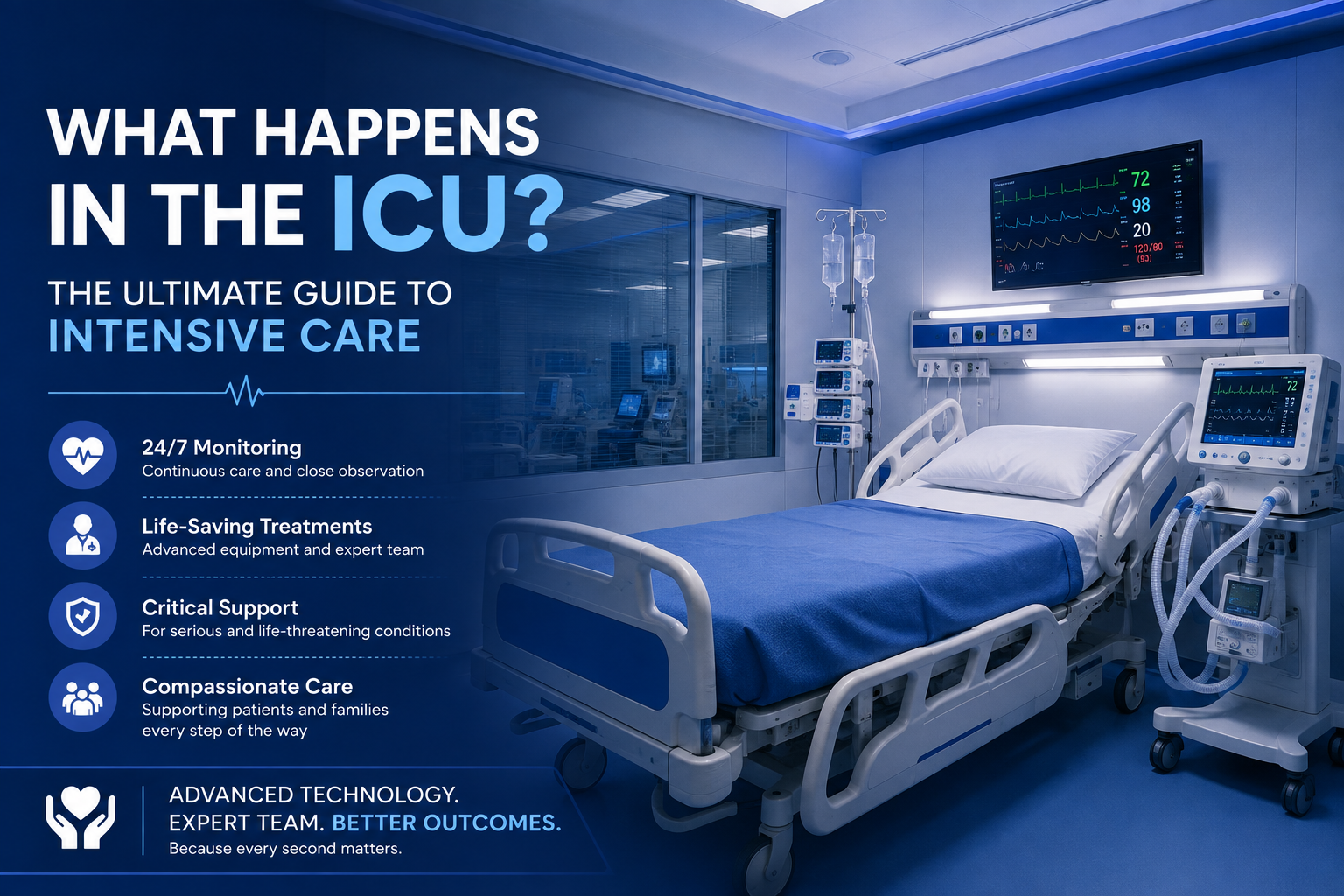
What happens in the ICU? The ultimate guide to intensive care in Islamabad.
The Intensive Care Unit (ICU) is a specialised unit where patients with severe illness or injury or patients coming out of large surgeries are given constant care. What happens in the ICU is that each patient is monitored at all times by experienced healthcare professionals who utilise advanced equipment, giving physicians the ability to react quickly if a patient's condition changes. The ICU's aim is to ensure the patient is stabilised, to help with vital body functions and to give them the best chance of survival by giving them personalised treatment.
It is very upsetting when we hear that our loved ones are going to be admitted to the ICU. The term “ICU” is often terrifying and unknown to many families, and it is stressful to know what happens in ICU. When people hear about the ICU, they often think that condition might be very serious or the worst, but the reality is that an ‘ICU' does not necessarily mean the worst. Many admitted patients are just in need of closer monitoring, specific treatment or temporary supportive care during the healing process of their bodies. The unit aims to deliver highly specialist medical treatment to those patients who need it on an ongoing basis, and doctors and nurses get a rapid response should their condition change.
Reliance Hospital's ICU has a top-of-the-line monitoring system, and they have well-trained doctors who can take care of and handle the critical situations, skilled ICU nurses and a multidisciplinary team of doctors. We offer 24/7 emergency services, constant monitoring of patients and empathy towards patients and their families, ensuring timely and expert medical care for all our patients.
This article is about the patients who may be admitted to an ICU, what equipment is used in the ICU, which health care workers they may have the opportunity of knowing and what people may expect from the ICU when they have a loved one in care.
What do you understand about the “Intensive Care Unit” (ICU)?
A separate part of the hospital with specially trained healthcare workers monitoring patients who are suffering from a disease, injury or illness and need extra support and care. In addition to the regular hospital ward, a patient in the ICU could be very sick at one moment and then get better the next and may need medical care any minute or hour.
The patient in the Intensive Care Unit (ICU) is under regular tracking by the use of very complex medical equipment that tracks his heartbeat, blood pressure, breathing, level of oxygen, etc., 24/7. This can enable the medical personnel to sense even small alterations in a patient's condition and act promptly.
A team of highly trained healthcare professionals, such as critical care doctors, experienced ICU nurses, respiratory therapists, anaesthetists and other healthcare specialists, are present to offer specific care. Each patient's care is done according to the patient's medical parameters to ensure that he/she is provided with the appropriate therapy at the appropriate time.
Many equate the ICU with life-threatening emergencies, but not so. Some patients are taken in after surgery for “routine monitoring”, while other patients may require intensive monitoring on a short-term basis in the ICU before being transferred to a regular hospital room. It is important to note that the ICU is not only used for treating critically ill patients but also for recovery and preventing any complications.
Who Needs ICU Care?
Not all patients who enter the hospital need intensive care. ICU (intensive care unit) care involves a unit in which doctors continuously monitor and attend to a patient's health and/or well-being, or where a patient requires special care to maintain his/her body's major functions, such as breathing, the function of organs, and circulation.
Some common reasons for transferring patients to the ICU are discussed below:
Serious Infections
Some infections can rapidly affect many organs. If the infection is severe, close monitoring, IV drugs and treatment are required to reduce the risk of additional complications.
Heart Emergencies
In many cases, those suffering from an acute heart attack, heart failure, arrhythmias or life-threatening issues in the heart rate need intensive medical care.
Stroke
Time is of the essence in a stroke, especially in the first couple of hours. The patient may be transferred to the intensive care unit (ICU) for careful monitoring of brain activity, blood pressure and neurological status by doctors and to initiate proper treatment.
Major Surgery
In some operations, the patient may need to be inserted into a specialised care unit in the hospital called the intensive care unit (ICU) for some period of time until the body is stabilised for transfer to a regular hospital room. Recovering, pain management, and complication screening have been actively managed by health care providers of this time period.
Severe Injuries
These road accidents or other traumas/injuries may often place a demand for intensive care treatment. Injuries are monitored, and help with recovery is provided to the patient 24 hours a day by the team working in the unit.
Difficulty in Breathing
Persons affected with pneumonia, respiratory failure, an asthma attack or other serious lung disease might require oxygen therapy or ventilator support. The ICU is appropriately equipped with trained staff for handling these conditions safely.
Organ Failure
When any major organ such as the lungs, liver or kidneys is affected, a need for intensive care may become necessary. When trying to help a patient get better from his or her illness, the patient will need help with breathing, medicine, or some other treatment like dialysis, depending on the circumstances.
It can be a scary experience to admit a patient to the intensive care unit (ICU), but in some cases, it is the safest place for the patient where he or she can sleep with proper supervision.
What happens when a patient arrives at the ICU?
It can be stressful to enter the ICU and think about what happens in the ICU, both for the patient and for the family. But all the measures taken on the person's admission are well thought out to stabilise the person with care taken to ensure proper care. Once the patient steps through the door into the intensive care unit, a group of highly trained healthcare professionals monitor the patient and initiate treatment.
In most cases, there is a similar course of action for most patients that are admitted to the ICU, regardless of the nature of their condition or injury.
Initial Medical Assessment
In the ICU, the initial concern is to determine as soon as possible what is a good measurement for the patients' health. A medical examination is provided, and a patient's medical history is assessed, as is the reason for admission. ICU staff also go through the treatments that have already been offered if the patient has been brought from the emergency department or the operation theatre.
In this evaluation, several vital statistics are assessed, including oxygen levels, breathing, temperature, level of consciousness, blood pressure, and heart rate. Doctors may also ask to get some blood tests, imaging tests, or other tests performed so they can learn more about what's going on in the patient's system.
The purpose of the initial review is to ensure that the patient is stabilised and a treatment plan is put into place which addresses the patient's immediate needs.
Continuous Patient Monitoring
Factors that separate the ICU from the regular hospital wards are among the differences mostly related to the level of monitoring. In the ICU, patients are monitored closely and constantly, as their condition can change rapidly.
Important body functions are monitored continually by advanced equipment, and a medical team is able to identify slight changes and take action if necessary.
The healthcare team might monitor based on the state of the patient:
Rhythm and rate of the heart
Blood pressure
Oxygen saturation
Breathing rate
Body temperature
Urine output
Neurological status
This ongoing supervision helps the patients provide the correct treatment, also minimises the threats to the patients and enhances treatment outcomes.
Personalized Treatment Plan
All patients in the ICU are unique. The medical team will provide a unique treatment for each patient based upon proper evaluation of the patient and in consideration of his/her condition and medical history.
Medications are used for the control of infection, to stabilise blood pressure, to relieve pain, and for heart function. Intravenous (IV) fluids may be given to keep patients well-hydrated, and oxygen therapy may be beneficial to a select group of patients to provide them their oxygen without worry. If the lungs are still not healing and the patient cannot breathe on her own, a ventilator may help the patient who can breathe outside of the lungs until she is better.
In some cases, a patient may also require blood transfusions, dialysis, nutrition and other special care in addition. Regular check-ups are done in the course of the patient's stay in the ICU, and the treatment plan is modified when needed.
The Intensive Care Unit has advanced medical technology, making it easier for doctors to closely monitor patients and make a quick reaction to changes in condition. While they may be intimidating, each piece of equipment is for a reason and is used to assist in the care and to help patients recover.
Heart Monitoring Systems
In the majority of patients in the ICU, the monitor is continually recording heart rate and heart rhythm. This will alert doctors if a person's heartbeat is irregular or if there are changes in the heartbeat immediately.
The monitor also provides for other key data, like oxygen and blood pressure, which allows the medical staff to have complete visibility about the patient's condition anytime.
Ventilator Support
A ventilator is a piece of equipment which helps in breathing when it cannot be done efficiently on one's own. It helps patients to get air to their lungs and get rid of carbon dioxide and allows their bodies to heal.
Not all patients who are in the ICU need a ventilator. In many instances they receive oxygen by means of a face mask or a tube into the nose. Using ventilators is only considered if this is medically necessary, and they gradually lessen ventilator support as the patient's breathing is gradually improved.
IV Infusion Pumps
Most medicines and fluid given in the ICU will be through intravenous (IV) lines. Infusion pumps are used to carefully control the process of giving the correct medicine, fluid or nutrients to the patient's blood at the right rates.
During treatment these pumps accurately provide the appropriate dosage to the patient correctly and safely.
Dialysis Machines
A number of people who are very sick develop temporary or permanent kidney problems that are not able to get rid of wastes and excess fluid from the body. In such cases, dialysis machines act like healthy kidneys, while the disease is treated or until the kidneys' function returns.
Medical Alarm Systems
ICU equipment is designed to alert healthcare providers when there are fluctuations in the patient's condition. A monitor may emit an alarm if the blood pressure goes down or if the oxygen level drops or the heartbeat rate deteriorates.
There are a lot of alarms that will alert staff to review a patient's condition or adjust a monitor. ICU nurses and doctors are specially trained to respond quickly and determine if treatment is warranted.
Which healthcare team takes care of ICU patients?
The ICUs need specialised doctors and medical staff to be available on a 24/7 basis. There are various duties performed by different members of the ICU team that help relieve patient suffering and ensure proper care of the patient.
Critical Care Doctors
Intensivists, or critical care physicians, monitor treatment in the ICU. They examine the patient, review test findings, make lifesaving medical decisions and collaborate with other experts in caring for the patient as necessary.
Experienced ICU Nurses
ICU hospital nurses never leave the patients and follow up with ongoing observations on patients throughout the day and night. They manage the medications and the medical equipment, monitor vital signs and alert medical staff of any changes as soon as possible.
ICU patients require continuous care, and one of the most important jobs is that of the nurse that seeks to ensure recovery and safety.
Respiratory Therapists
Respiratory therapists can be hired to work with patients that are struggling with breathing. These professionals could care for individuals' ventilators, oxygen treatment, and various other breathing therapies and partner with doctors to enhance lung operation.
Medical Specialists
Depending on the patient's situation, other specialists may be involved with the patient's care. They may involve specialists such as cardiologists, neurologists, nephrologists, surgeons, or infectious disease specialists or other specialists who may have a particular role in providing special treatment if it's needed.
Rehabilitation Team
Physiotherapists, dieticians, and rehabilitation professionals are included when patients begin to regain their strength and mobility and fulfil nutritional requirements. Such specialists are an important resource that aids patient's recovery and functioning following discharge from the ICU.
Can relatives come to the Intensive Care Unit (ICU)?
Families of loved ones who are admitted to the ICU wish to be physically and spiritually present, to support them and bring comfort. Most hospitals do permit visits to ICUs, but depending on the patient's condition and hospital policies, this may differ.
The intensive care unit (ICU) is a specialised unit that is centred on patients who need constant monitoring and care. People visiting the unit may be asked to adhere to some rules: to help minimise the risk of infection and to ensure that the medical staff do not become tired assisting with medical needs.
Family members are a very important part of recovery even if you don't have a long period of time to spend with them. Calm, conversational interaction with the patient and give emotional support during a difficult time. Families are also provided with regular updates on their relative's condition by doctors and nurses and will be offered answers to their questions as much as reasonably possible.
We know how distressing it can be for families when they are admitted to an intensive care unit (ICU) at Reliance Hospital. We value open communication and proper care within our healthcare team, making sure that patients' families are kept updated on the care given and offered necessary advice through the treatment.
What is the average length of stay in total in the ICU?
The length of time that a patient will be in an ICU depends on the condition and varies from patient to patient. Depending on the type of services you are receiving, you might require intensive monitoring for a day after surgery, or you may have a serious condition or injury that requires several days or weeks of intensive services.
The duration of the ICU stay will vary according to the patient's general condition, the reason for admission, and whether they are responding to therapy. Each patient's progress is assessed regularly, and the doctors determine when it is safe to move them in and out of the hospital ward.
The idea is not to extend a patient's stay in the ICU but to provide intensive care until they are stable enough to pursue further recovery in a less sophisticated environment.
What happens when patients are discharged from the ICU?
Taking a patient out of the ICU is a milestone, but this does not necessarily mean the end of the recovery process. When a patient's conditions are stable, he or she is typically moved to a hospital room where treatment and monitoring can proceed.
Physiotherapy to help with occasional mobility, nutritional rehab to restore energy, breathing exercises to exercise the lungs or medications for continuity of care may be indicated depending on the status of the patient.
Some patients recover completely; others need more rehabilitation before returning home. Follow-up visits help doctors to track the progress of patients and ensure a safe recovery journey for the patients.
As well, families have a vital support function once a patient leaves the ICU in regard to compliance with medication, following up on visits and providing emotional support during the recovery process.
Basic illusions in ICU.
People often have misconceptions about intensive care due to stories they may have heard. Knowledge of facts can help to alleviate fear and anxiety.
Myth: All patients in an intensive care unit (ICU) are on a ventilator.
Truth: A ventilator is not for all the patients in the ICU. Many are admitted just because they require careful watching and special drugs or regular check-ups. Ventilators are not used unless someone cannot breathe properly without them.
Myth: Elderly patients shouldn't be treated in the ICUs.
Truth: Intensive care is needed for individuals of any age. Alders, children, and apparently healthy people may require treatment in the intensive care unit following serious infections, accidents or large operations.
Myth: Recovery is complete upon leaving the ICU.
Truth: When the patient is discharged from the ICU, many patients need further hospitalisation, rehabilitation and follow-up services to achieve full recovery.
Why is it important to have the right ICU?
A hospital that has a well-equipped intensive care unit (ICU) and a skilled team can do proper care of patients.
A modern intensive care unit (ICU) is not only equipped with proper medical facilities, but it also has much more to offer. It's a group of specialised doctors, specially trained nurses, respiratory therapists, and other experts working together to provide around-the-clock care. Access to a range of advanced monitoring, diagnostic services and infection control measures are all very important in keeping patients safe and providing effective care.
Another factor for families to consider is whether the hospital offers a wide range of treatments at a single location. Immediate access to the services of emergency medicine, surgical services, diagnostic imaging, laboratory services and rehabilitation support enables the treatment of patients in a coordinated manner without any unnecessary delays.
Why prefer Reliance Hospital for ICU care services in Islamabad?
Reliance Hospital is dedicated to offer proper medical care for those who have crucial medical issues. The intensive care unit is set up to provide patients with optimal treatment in both a safe and well-monitored setting to support them during their recovery.
Expert Critical Care
We have trained critical care doctors staffing our ICU with efficient nurses and other specialist professionals who work together to treat the patients according to their needs.
Advanced ICU Technology
Reliance Hospital's ICU has all modern patient monitoring systems, ventilator supports, infusion pumps and other advanced medical equipment that enables our healthcare team to monitor patients in real time and take action as soon as possible when needed.
24/7 Emergency Care
A medical emergency may occur anytime; that is why we have a 24-hour ICU. Our emergency response team is dedicated for treating the critically ill patients and dealing with the complicated medical scenarios without delay.
Compassionate Patient Care
We think that healthcare quality means much more than just treating patients. We strive to ensure that our patients and their families receive the highest quality of care during their stay in the ICU.
Complete Hospital Support
Being a multidisciplinary hospital, it provides all the facilities, including emergency, excellent diagnostics, a well-equipped OT, specialists and rehabilitation. This process will enable patients to receive treatment from admission up to recovery without having to carry out everything under the roofs of the same healthcare professional.
Do family members get to visit the ICU?
Families want to be with their family members when they are admitted to the ICU and offer what comforts them. Visiting hours and policies may change depending on the patient's condition, infection control measures, and hospital policies, but most hospitals will permit visitors to visit the patient in the ICU.
The ICU is an extremely specialised unit in which patients demand constant observation and care. People might be told to follow some rules to minimise the risk of infection and to enable the health services to work non-stop. It could mean restricting the number of people who can visit, washing hands before allowing them to visit, wearing protective clothing where required and not visiting if unwell.
The family is very important in the recovery process even though they may not spend too much time visiting the patient. It is essential that the patient is mentally prepared for the difficult period through calming talk and reassuring them about everything. In addition, the doctors and nurses make sure that the families know how their relatives are faring.
We know that hospitalisation in an intensive care unit (ICU) is emotionally challenging for families at Reliance Hospital. We value transparency and considerate medical care, making sure relatives are kept well-informed and counselled during the whole patient's care process.
What is the average length of time that people spend in the intensive care unit?
The length of ICU stay is not specified, as each medical condition is unique. A minor major surgery may only require intensive monitoring for a day or two, but those who have serious illnesses or injuries may need intensive monitoring for several days or even weeks.
An ICU stay varies from person to person and will depend on the underlying health conditions, indications for admission, response to treatment and the occurrence of complications. Regular checks are made on each patient's progress, and plans are made to move the patient to the general hospital ward when it is safe.
What is post-ICU?
It is quite important that the patients are moved out of the ICU; nevertheless, it doesn’t mean that the process of healing is over.
When a patient’s condition gets better, he or she is moved into a regular hospital room.
There are some patients who recover very quickly, whereas other patients need some rehabilitation before they can finally return home. The progress of such patients will be constantly monitored during regular visits in order to ensure their safe recovery.
The role of families in post-ICU is very important, as they support the patient in taking their medications, following their appointments and supporting the patient's emotional needs through their recovery.
Conclusion
Admission into an Intensive Care Unit (ICU) may not be very easy for anyone, but gaining more knowledge about the intensive care unit will definitely ease your mind and help you to get rid of the doubts and fears which generally accompany an admission into ICU. It is a specialised department where the patient is constantly monitored and provided with advanced treatment and expert medical care when needed the most. No matter why they are in the intensive care unit, whether they are recovering from major surgery, a serious illness or receiving lifesaving treatment, every decision made in the intensive care unit is made to improve their condition and support their recovery.
Our approach to critical care at Reliance Hospital is providing high-quality care in a safe, caring, patient-centred environment. Our thorough critical care team, our dedicated 24x7 nurses, sophisticated monitoring systems and our emergency response team are all integrated with our system to provide timely and personalised care to each of our patients. Our modern diagnostic facilities, availability of specialists and in-depth hospital facilities are all under a single roof, with which we ensure seamless care for the patients from admission to recovery.
The reliable infrastructure, modern technology, medical expertise, and caring attitude of the professionals at Reliance Hospital makes it the best place for intensive care, which is very important at some of the most crucial stages in one’s life. Contact Reliance Hospital today and know more about our ICU services.