Good Nursing Staff for ICU Care in Islamabad
By Admin · Content Admin
Professional ICU nursing care in Islamabad with 24/7 monitoring, ventilator support, trained critical-care staff, and specialist care at Reliance Hospital.
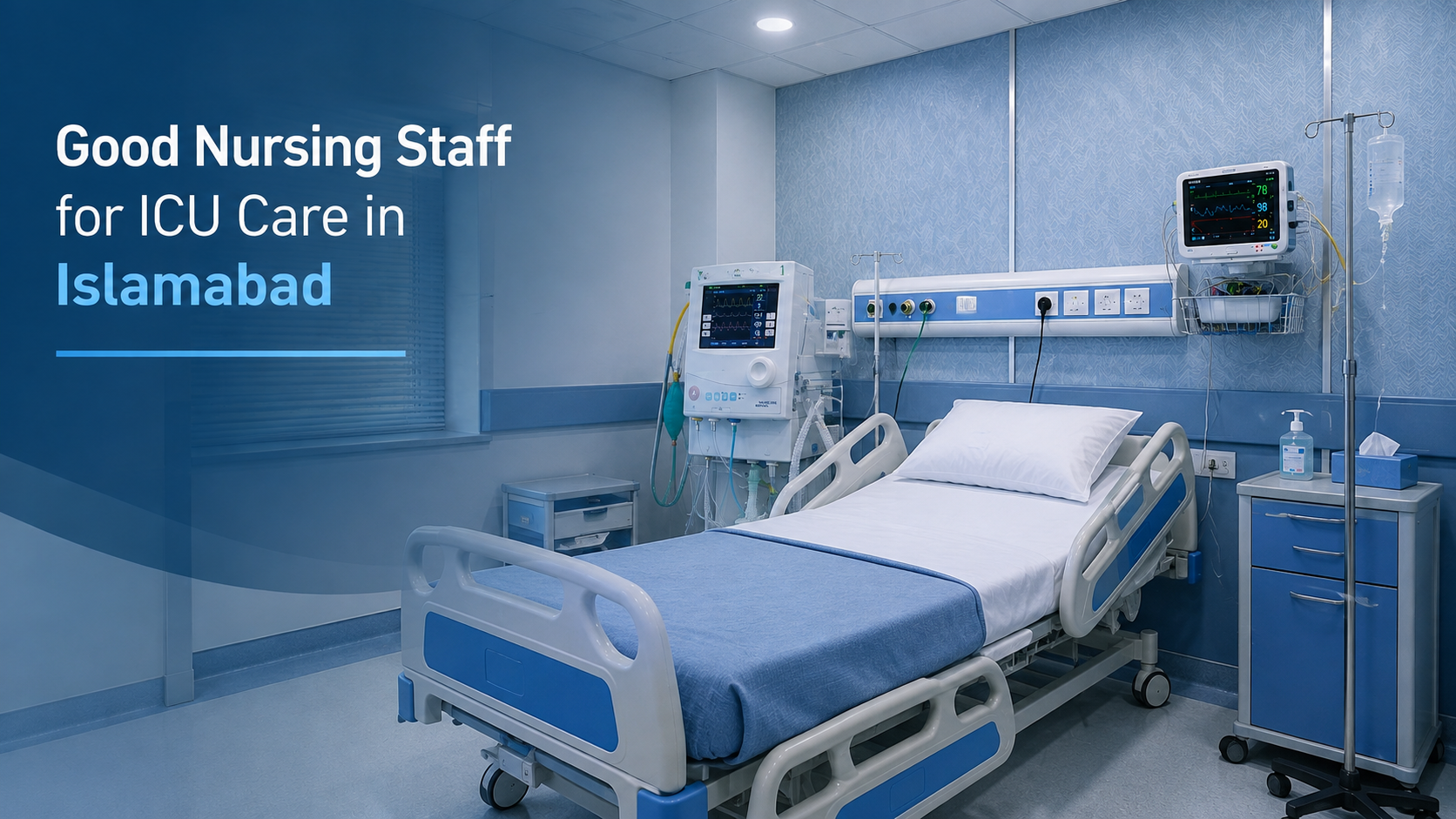
Good Nursing Staff for ICU Care in Islamabad
Many qualities matter in the definition of a good nurse, but behaviour towards the patient is especially important. When working as part of a healthcare team, nurses need to maintain a positive and professional approach, communicate clearly, observe patients carefully, and work with doctors and other healthcare professionals to support the best possible recovery and outcomes.
Good and trained nursing staff is one of the most important parts of any hospital, particularly in an Intensive Care Unit (ICU), because nurses remain closely involved in the patient's care and continuously observe their health condition, vital signs, symptoms, and response to treatment. It is not wrong to say that ICU nurses play a central role in 24/7 patient monitoring and critical care.
In an ICU, nurses are specially trained to care for critically ill patients, including those experiencing respiratory disorders, severe infections, cardiac problems, complications after surgery, or conditions requiring ventilator support. Their role includes recognising changes in a patient's condition, following clinical protocols, administering prescribed medications, maintaining infection-control measures, and communicating important changes to the responsible doctor and critical-care team.
Pakistan-based research also highlights the importance of specialised critical-care training, teamwork, proper monitoring, and evidence-based practices among healthcare professionals working in intensive care settings.
What Are the Qualities of a Good ICU Nurse?
For ICU nursing, certain qualities become particularly important because nurses work with patients whose conditions can change quickly. They need to observe carefully, communicate concerns clearly, work with other healthcare professionals, remain calm under pressure, and provide patient-centred care.
For nurses working in the ICU, professional training is particularly important because the patient's condition can sometimes be unpredictable and may require continuous observation. ICU nurses should understand critical-care monitoring and be trained in caring for patients receiving advanced respiratory support, including mechanically ventilated patients.
A national survey of critical-care services in Pakistan showed the importance of trained nursing staff and appropriate nursing coverage in ICU settings. The study also found wide differences between Pakistani ICUs in staffing, specialist availability, ventilator capacity, and critical-care resources, highlighting why families should consider the quality of both staff and facilities when choosing an ICU.
Some of the most important qualities are discussed below.
Good Communication Skills
Nurses serving patients in the ICU should have good communication skills with patients, their families, doctors, and other members of the healthcare team.
Listening to the patient and family can provide useful information about symptoms, previous health conditions, medications, and changes they may have observed before admission. Clear communication within the medical team is equally important so that important information is not missed and the risk of misunderstanding or medical error can be reduced.
Communication becomes even more important when the patient is unconscious, sedated, on a ventilator, or otherwise unable to speak for themselves. In such situations, families naturally want to understand the patient's condition and what is happening.
Research from intensive-care settings in Pakistan has also found that communication with families and involving them appropriately in the care process can improve their satisfaction with ICU care.
Observation and Critical-Thinking Skills
An ICU nurse should be able to recognise important changes in a patient's condition and respond according to established clinical and emergency protocols.
For example, changes in blood pressure, oxygen saturation, heart rate, breathing pattern, consciousness, urine output, or other vital parameters may require prompt assessment and communication with the responsible physician.
ICU nurses do not independently prescribe medical treatment. Instead, they work closely with doctors and the wider critical-care team, follow prescribed treatment plans, initiate appropriate nursing interventions within their professional scope, and promptly communicate any deterioration in the patient's condition.
This combination of observation, clinical judgement, teamwork, and timely escalation is particularly important in critical care.
Calm and Professional Behaviour
The ICU can be stressful for patients as well as their families. Critically ill patients may experience fear, pain, confusion, breathing difficulties, or difficulty communicating.
A good ICU nurse should therefore remain calm and professional even when a patient's condition changes suddenly. A calm approach helps the nursing team carry out necessary care while also providing reassurance and support to the patient and family.
Medication Safety and Attention to Detail
Medication administration is another important nursing responsibility in the ICU. Critically ill patients may receive multiple IV medicines, fluids, antibiotics, pain medicines, or vasoactive drugs, which require careful administration and monitoring.
A recent study involving 426 ICU nurses from hospitals in Pakistan examined knowledge, attitudes, and behaviours related to intravenous medication administration. The research emphasised the importance of training, correct medication practices, hand hygiene, and monitoring patients before and after certain IV medications.
This makes attention to detail and continuous professional training essential qualities for critical-care nurses.
Why Is It Important for Nurses to Take Care of ICU Patients 24/7?
Working in the ICU requires round-the-clock patient care and monitoring because the condition of a critically ill patient may change within a short period.
The ICU team continuously monitors important parameters such as heart rate, blood pressure, oxygen saturation, respiratory rate, temperature, level of consciousness, and other measurements depending on the patient's condition.
Nurses also monitor medical equipment and administer treatments and medications prescribed by the treating doctor. They remain in communication with the responsible physician and other specialists when updates or further medical guidance are required.
If a patient's condition changes suddenly, trained ICU nurses can recognise warning signs, follow the appropriate emergency protocol, and immediately alert or coordinate with the medical team.
Research examining critical-care services in Pakistan describes ICU-level care as requiring much closer monitoring than an ordinary hospital ward, with critically ill patients requiring continuous monitoring and significantly greater clinical supervision.
The role is therefore not only to monitor machines and numbers. ICU nursing also involves maintaining patient hygiene, infection-control measures, medication safety, comfort, documentation, and communication with the wider medical team.
Why Specialised Training Matters for Ventilated ICU Patients
Patients requiring mechanical ventilation need particularly careful monitoring.
ICU nurses caring for these patients work alongside critical-care physicians and, where available, respiratory-care professionals. Their nursing responsibilities may include monitoring oxygen saturation and respiratory status, observing the patient's response to ventilatory support, airway and suction care according to protocol, infection prevention, positioning, oral care, medication administration, and identifying signs of deterioration.
A study conducted across eight tertiary-care hospitals in Islamabad and Rawalpindi examined the knowledge and practices of doctors, nurses, and respiratory therapists regarding ventilator-associated pneumonia. The researchers highlighted the importance of experience, specialised critical-care training, evidence-based practices, and effective communication between healthcare professionals in caring for mechanically ventilated patients.
These findings demonstrate why families should consider not only the availability of a ventilator but also the training and teamwork of the people caring for a patient who requires ventilatory support.
What Should You Look for in ICU Nursing Staff in Islamabad?
While choosing an ICU in Islamabad, families are naturally worried about whether their loved one will receive good and professional care.
Because much of the continuous bedside observation in an ICU involves nursing staff, families should consider the quality of the ICU team as well as the facilities available.
Some important things to look for include:
Specially trained ICU nursing staff
24/7 critical-care monitoring
Proper monitoring of vital signs
Mechanical ventilator and respiratory support
Clear emergency-response protocols
Safe medication administration
Infection-control and hygiene practices
Good communication with patients and families
Availability of relevant medical specialists
Coordination between nurses, doctors, and other healthcare professionals
Communication with families is particularly important because an ICU patient may not always be in a condition to speak for themselves. Nurses and doctors therefore need to keep appropriate family members informed while maintaining patient privacy and following hospital policies.
Good Nursing Staff for ICU Care at Reliance Hospital, Islamabad
Reliance Hospital has trained ICU nursing staff working as part of a multidisciplinary critical-care team to provide round-the-clock care for critically ill patients.
The medical team evaluates the patient's medical history, reports, current clinical condition, and treatment requirements before developing an individual care plan. Nursing staff then work closely with the responsible doctors and specialists to follow the prescribed treatment plan and continuously monitor the patient's condition.
Reliance Hospital states that its ICU provides 24/7 critical-care monitoring, advanced patient-monitoring systems, mechanical ventilator support, trained ICU specialists and nursing staff, emergency-response facilities, infusion and syringe pumps, isolation beds, infection-control protocols, and immediate diagnostic support.
For patients requiring respiratory support, the hospital also provides oxygen therapy, non-invasive respiratory support and invasive mechanical ventilation when clinically appropriate, with continuous bedside monitoring. Respiratory care is managed as part of the wider critical-care team rather than by one healthcare professional working independently.
The ICU nursing staff can also work alongside specialists from relevant departments such as cardiology, nephrology, neurology, pulmonology, infectious diseases, and other specialties when required by the patient's condition.
This multidisciplinary approach is particularly important because critically ill patients may have more than one organ system affected at the same time.
Why Is Reliance Hospital a Good Choice for ICU Care in Islamabad?
Reliance Hospital's ICU serves patients from Islamabad, Rawalpindi, Bahria Town, DHA, Gujar Khan, Kahuta, and surrounding areas and is designed for patients requiring intensive medical supervision.
Some of its important ICU facilities include:
Trained ICU nursing staff
24/7 critical-care monitoring
Advanced patient-monitoring systems
Mechanical ventilator support
Emergency response facilities
Infusion and syringe pumps
Oxygen supply and centralised gas system
Isolation beds when clinically required
Infection-control protocols
Immediate laboratory and diagnostic support
Portable imaging support
Availability of specialists under one roof
Family counselling and patient updates
For a critically ill patient, having equipment alone is not enough. The combination of appropriate monitoring, trained staff, medical specialists, emergency-response systems, and communication between different healthcare professionals is what creates a complete critical-care environment.
Frequently Asked Questions
What is the responsibility of an ICU nurse?
An ICU nurse provides specialised nursing care and continuous observation to critically ill patients. Responsibilities may include monitoring vital signs, administering prescribed medications, observing the patient's response to treatment, maintaining infection-control practices, providing bedside care, documenting changes, and communicating important findings to doctors and the wider critical-care team.
Good communication with patients and families is also an important part of ICU nursing.
Is ICU nursing care available 24/7 in Islamabad?
Yes. Reliance Hospital states that its ICU is operational 24 hours a day, seven days a week, with trained ICU nursing staff and critical-care services available for patients requiring continuous monitoring.
What qualities should good ICU nurses have?
A good ICU nurse should have strong observation and communication skills, teamwork capabilities, attention to detail, medication-safety awareness, and the ability to remain calm in critical situations.
Continuous learning and professional critical-care training are also important because ICU equipment, treatment protocols, and patient-care practices continue to develop.
Do ICU nurses make medical treatment decisions independently?
ICU nurses use professional nursing judgement and respond according to their training, scope of practice, and established clinical protocols. However, medical diagnosis and prescription of treatment are responsibilities of appropriately qualified medical practitioners.
Nurses play an important role in identifying deterioration early, starting appropriate nursing or emergency actions within protocol, and immediately communicating with the responsible medical team.
Does Reliance Hospital have trained ICU nursing staff?
Yes. Reliance Hospital states that its ICU has trained ICU specialists and nursing staff available 24/7, working as part of the wider critical-care team. The hospital also provides mechanical ventilator support, continuous monitoring, isolation facilities, emergency equipment, and diagnostic support for critically ill patients.
Does Reliance Hospital provide ventilator support?
Yes. Reliance Hospital provides mechanical ventilator and respiratory support for patients who cannot breathe adequately on their own. Depending on the patient's clinical condition, respiratory support may include oxygen therapy, non-invasive ventilation or invasive mechanical ventilation.
Conclusion
Choosing a quality ICU with good nursing staff is very important because critically ill patients require continuous monitoring, timely medical attention, and coordinated care.
At Reliance Hospital, Islamabad–Rawalpindi, trained ICU nurses work closely with doctors and other healthcare professionals, follow prescribed treatment plans, continuously monitor patients, administer medications safely, and communicate important changes to the medical team.
Good communication with families is also an important part of ICU care, particularly when patients are unable to communicate for themselves.
Reliance Hospital's ICU in Bahria Town is designed to provide these services round the clock for patients requiring intensive monitoring and critical care. Its combination of 24/7 monitoring, ventilator support, trained nursing staff, emergency-response facilities, infection-control measures, diagnostic support, and access to medical specialists provides a comprehensive critical-care environment for patients and their families.
For families dealing with a medical emergency or a patient who may require intensive monitoring or ventilator support, contacting the hospital directly can help confirm ICU availability and allow the medical team to assess the appropriate next steps.
Medical References
1. Shah HBU, Atif I, Rashid F, et al. — Knowledge and practices of critical care health professionals related to ventilator-associated pneumonia in tertiary care hospitals of Islamabad and Rawalpindi.
Journal of Pakistan Medical Association. The study included doctors, nurses, and respiratory therapists from eight tertiary-care hospitals in Islamabad and Rawalpindi and highlighted the importance of experience, specialised critical-care training, evidence-based practice, and communication in ventilated-patient care.
2. Intravenous Medication Administration Practices: Insights into Knowledge, Attitude, and Behavior of Intensive Care Unit Nurses in Pakistan.
This Pakistan-based study evaluated 426 ICU nurses and highlighted the importance of professional education, medication-safety practices, monitoring, hand hygiene, and ongoing clinical training in intensive-care nursing.
3. A National Survey of Critical Care Services in Hospitals Accredited for Training in Pakistan.
This national research evaluated ICU infrastructure, staffing, ventilator availability, monitoring facilities, and nurse-to-bed coverage across Pakistan, demonstrating the importance of appropriate staffing and critical-care resources.
4. Family Satisfaction with Care Provided to Patients Deceased in Intensive Care Unit — Pakistan.
The study highlighted the importance of clear communication with families and appropriately involving family members in the care and decision-making process as part of quality ICU care.